
Meet The Judges
- Lauren Henderson
- Feb 15, 2021
- 8 min read

Updated: Apr 28, 2021
District Court
Judicial District 7: Scott County
Phillip J. Taber
District Associate Judge: Judge Tabor was appointed to the bench in 2008. He earned his bachelor's degree with honors from the University of Iowa in 1981. He then received his law degree from the University of Wyoming in 1984. Judge Tabor served as an Assistant County Attorney, an Assistant Public Defender, and an Assistant Attorney General in the State of Wyoming. He was elected Jackson County, Iowa, Attorney in 1990. He was re-elected in 1994, 1998, and 2006. Judge Tabor is married with two children.
Cheryl E. Traum
District Associate Judge: Judge Traum was appointed to the bench in 2012. She earned a BA Degree in 1979 from the University of Northern Iowa, and her law degree from the Northern Illinois College of Law in 1998. She is a member of the Iowa State Bar Association and the Scott County Bar Association. From 2002 until her appointment to the bench, Judge Traum was in the private practice of law in Davenport, Iowa. Judge Traum resides in Bettendorf, Iowa, and is married with two children.
Patrick J. McElyea
District Court Judge: Patrick McElyea, Davenport, was appointed to the bench in 2017. He received his undergraduate degree from Central College and his law degree from Drake University Law School. He previously served as a Special Assistant United States Attorney in the Southern District of Iowa.
Court of Appeals
Thomas M. Bower
Chief Judge: Chief Judge Bower, Cedar Falls, was appointed to the Iowa Court of Appeals in January 2012 and was elected as Chief Judge in October 2019. Judge Bower received his bachelor's degree from Illinois State University in 1984 and his law degree from Drake University in 1987.
Judge Bower was appointed to the district associate court bench in 1993 and the district court bench in 1995. He was appointed Chief Judge of the First District in 2010. Prior to his appointment, he served as an Assistant City Attorney for the city of Ames and as an Assistant Black Hawk County Attorney. Judge Bower helped to establish the Black Hawk County Adult Drug Court program in 2006 and a mental health court program in 2009. Judge Bower is a member of the Iowa State Bar Association, Black Hawk County Bar, and the Iowa Judges Association.
Sharon Soorholtz-Greer
Judge: Judge Soorholtz Greer, Marshalltown, was appointed to the Iowa Court of Appeals in April 2019. She received double undergraduate degrees in Psychology and Child Development from Iowa State University and her law degree from the University of Iowa College of Law. Before her appointment, Judge Soorholtz Greer practiced law with Cartwright, Druker & Ryden in Marshalltown. She is a member of the American College of Trial Attorneys.
Paul B. Ahlers
Judge: Judge Ahlers, Fort Dodge, was appointed to the Iowa Court of Appeals in November 2019. He was appointed to the district associate bench in March of 2011. He graduated from Iowa State University with a Finance degree in 1991 and from the University of Iowa School of Law in 1994. From 1994 to 2008 Judge Ahlers practiced in a private law firm. From 2008 to 2011, he served as claim counsel in the Bond and Financial Products Claim Group for the Travelers Companies. Judge Ahlers is a member of the Iowa State Bar Association.
Iowa Supreme Court
Oxley Swisher
Justice: Justice Oxley, Swisher, was appointed to the Supreme Court in January 2020.
Justice Oxley was born in Neosho, Missouri, and grew up in Greenfield, Iowa. She received her undergraduate degree in accounting from the University of Northern Iowa in 1990 and received her J.D. from the University of Iowa in 1998, graduating Order of the Coif. Following law school, Justice Oxley served as a one-year term clerk for the Honorable David R. Hansen on the Eighth Circuit Court of Appeals and later returned to serve as a career law clerk for Judge Hansen until 2011. Prior to being appointed to the Supreme Court, Justice Oxley practiced with Shuttleworth & Ingersoll PLC in Cedar Rapids.
Matthew McDermott
Justice: Justice McDermott, West Des Moines, was appointed to the Supreme Court in April 2020. Justice McDermott was born and raised in Carroll, Iowa. He received his bachelor's degree from the University of Iowa in 2000 and his law degree from the University of California, Berkeley in 2003, where he served as an editor of the California Law Review. Justice McDermott worked as an attorney in private practice until his appointment. He is a former member of the Iowa State Bar Association’s Board of Governors and chair of its Judicial Administration Committee. He is past-president of the Iowa State Bar Association’s Young Lawyers Division and received its highest honor, the Award of Merit, in 2013. Justice McDermott previously served on the United Way of Central Iowa’s Chair’s Cabinet and co-chaired its Tocqueville Society campaign. He received the United Way of Central Iowa's "Volunteer of the Year" award in 2017. Justice McDermott also previously served on the board of directors and as board president for Iowa Legal Aid, the Iowa Lottery Authority, Polk County Homeless Continuum of Care Board, and Central Iowa Shelter & Services.
Christopher McDonald
Justice: After graduating from law school, Justice McDonald served as a law clerk to the Honorable David R. Hansen, United States Court of Appeals for the Eighth Circuit. Justice McDonald then worked in private practice in Central Iowa for a number of years before being appointed to serve as a Judge of the District Court, Fifth Judicial District of Iowa. In 2013, he was appointed to the Iowa Court of Appeals. In 2019, he was appointed to the Supreme Court of Iowa. Justice McDonald has been an active member of his community. He has supported numerous non-profit, community, and professional organizations in Iowa. He has served on the Board of Directors of Bravo Greater Des Moines, the Iowa Asian Alliance, the Iowa Foundation for Microenterprise and Community Vitality, and the Iowa Judges Association, among others. Justice McDonald is a recipient of the Governor's Volunteer Award.

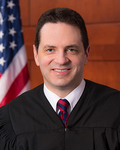



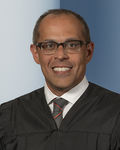


Christopher McDonald Makes History in 182 Years of Iowa Supreme Court
Iowa Supreme Court Justice, Christopher McDonald, comes to the chair bringing, “incredible character, independence, competent and the right temperament for a judge”, Iowans state in an article written by the Gazette.
Justice McDonald is a Supreme Court justice after being appointed to the Court of Iowa in 2019. With an impressive background, McDonald began his law career serving as a law clerk for David R. Hansen. Hansen works on the United States Courts of Appeals for the Eighth Circuit where he is a Senior Judge.
Serving as a law clerk, McDonald’s tasks included researching many legal issues and appeal cases. Clerks also had the job of writing legal memorandums that would help summarize relevant facts and laws that were found in specific cases.
Following a prestigious role to David R. Hansen, McDonald moved on to work in private practice for five years before he served on Iowa’s Fifth Judicial District as the District Court Judge. As his love for law only grew stronger, McDonald was then appointed to the Iowa Court of Appeals by Terry Branstad in 2013 and was appointed by Reynolds to the Iowa Supreme Court.
McDonald graduated from Grand View University with an undergraduate degree and by 2001, McDonald was a graduate of the University of Iowa College of Law where he was very well decorated. He received the John F. Murray Award, Order of the Coif Society Honorable Mention and graduated as Valedictorian during his time at the university.
McDonald’s background isn’t as traditional as the other Iowa Supreme Court Justices; he didn’t grow up in a rural town for the entirety of his life. Instead, McDonald was born in Bangkok, Thailand to a Vietnamese mother and a Scotch-Irish father and lived on military bases for the first 10 years of his life.
When McDonald assumed office on Feb. 20, 2019, history was made. McDonald is the first minority justice on the Iowa Supreme Court in its 182 years. With McDonald’s varying background, it allows him to have his own opinion on racial concerns and the ways he views certain laws.
McDonald opens up in an interview and tells one of his first experiences with a Police Officer. McDonald was in the passenger seat of his mother’s car when she was being pulled over by the officer. Immediately, the officer got out of his car and approached the passenger side window with his gun drawn, ordering McDonald to put his hands up and exit the vehicle.
McDonald later says that the officer assumed he was carjacking her or trying to hurt his mother. It is also noted that McDonald, “believes his braided hair would have been perceived as an African American hairstyle.”
This interaction opened his eyes immediately to the racial justice issues that are present in society. He was able to understand the importance of police-citizen encounters and it allowed him to reflect on the values he was raised on.
“My parents were simple people. They were patriots and they believed in simple values: Equality, freedom justice and the rule of law”, McDonald states. “As a judge, it’s a very powerful thing to be raised in a family where people appreciate those values.” Being raised on such ethical values greatly helps him in a career where he must find justice for the people who deserve it.
The foundational values in which McDonald was raised are very crucial to a law professional. In the position that Justice McDonald is in, having values that are as basic and as human as they get can really provide different views on crucial cases or even bring deranged cases back to the fundamental values that should be examined.
When taking a closer look at the media and the ways it portrays Justice McDonald, the COVID-19 Pandemic has most definitely affected the search results. COVID-19 has impacted the way the court works in many ways. For instance, many courts these days have opted for Zoom Calls and Meetings to reduce people within the courtroom and the spread of the disease.
Because COVID-19 has taken such a toll on the way the courts work as well as the impact it has made on the world we live in, McDonald did take office in 2019, but his cases are minimal in the news. Luckily, I was able to find a different angle on Justice McDonald.
As I have analyzed previously in this post, McDonald is the first minority justice on the Iowa Supreme Court in all of its 182 years. This is monumental for both parties. It gives others hope and shows the public how far we have yet to go as a society with inclusion.
“I know that as the first minority or person of color appointed to the supreme court, people will have special expectations for me in terms of leadership and mentorship and I understand that,” McDonald states in an interview with the Iowa Public Radio on being elected and in making history.
As people of the public, it’s hard for us to comprehend the pressure that McDonald must be feeling at this time in his life. He is one justice trying to represent a multitude of groups of people. Much like the other justices feel the same, McDonald is in uncharted territory for the Iowa Supreme Court and the public.
“I appreciate that. I embrace those expectations, and I’ll certainly do my best to meet and exceed them.” McDonald responded to the expectations of leadership being forced upon him as he takes this leap for himself, Iowa, and minority groups looking for justice.
McDonald has made it a point to support various non-profit, community, and professional organizations which also goes a long way when looking at what other supreme court justices support. McDonald brings a perfect balance to the table.
In one of his most recent cases, McDonald is seen examining the issue involving ballots and the rules with ballots being altered on the night before an election. This case was back in October of 2020, but it was one of the first major cases McDonald was involved in and a great first case to be recognized in as it was a huge election matter.
Justice McDonald shows true versatility for the Iowa Supreme Court and he will be able to provide a new mindset due to his previous experiences. Being a newer justice, McDonald has been portrayed by the media with all of his intentions to uphold the great responsibility Iowans and minorities have placed on him.
From military bases to a chair on the Iowa Supreme Court, Justice McDonald continues to put his childhood values on the forefront to provide justice for those who deserve it.
Comments